Why ad creative is your greatest performance tool
Meta has spent two years rebuilding its advertising system around AI, and in doing so it has moved the main performance lever out of the ad set and into the ad itself. Here is what changed and how you can use it to build greater performance.

How Meta advertising has changed
For most of the last decade, the craft of Meta advertising lived in the ad set. You built interest stacks, layered lookalikes, split audiences into segments, and moved budget towards whichever combination was converting. Creative did matter, but it was the thing you plugged into the machine once the targeting was solved. We have seen plenty of accounts grow effectively that way.
That is different now, and two factors ended most of what used to work for us.
The first was a sharp reduction in the signals Meta could see. Apple’s tracking changes in 2021 made targeting less reliable, and Meta responded by leaning harder on modelling than on advertiser instruction.
The second was Meta removing our controls. From June 2025 specific interest categories were consolidated into broader groupings, and in January 2026 ad sets still relying on deprecated interests simply stopped delivering. By February 2026 the automated Advantage+ build flow had become the default path for new Sales, Leads and App Promotion campaigns. [1] [2] [3]
For those of us in the paid media game, most of the levers we were used to pulling stopped existing.
How Meta works now
While all that was happening, Meta rebuilt its delivery system. Andromeda, introduced in December 2024, is the ads retrieval engine. Retrieval is the first step of delivery, where the system narrows tens of millions of possible ads down to a few thousand candidates before the ranking models take over. Meta describes this stage as processing three orders of magnitude more ads than everything that follows it, which is why it became the bottleneck. [4]
GEM, Meta’s Generative Ads Recommendation Model, arrived in late 2025 and sits above all of this as a foundation model trained at the scale of a large language model. It learns from user behaviour across organic and paid surfaces, then passes that knowledge down into the individual ranking models across the ad stack. Meta reported a 5% increase in ad conversions on Instagram and 3% on Facebook Feed after launch. [5]
Meta has been unusually direct about what this means for advertisers. In its own guidance, the company states that with the rise of AI-enabled advertising tools, the focus has shifted from niche targeting to creative diversification as the best lever to find the most relevant audiences. The long-standing recommendation to run no more than six ads per ad set has now completely disappeared from its documentation. [7]
How you can use it
At Arkyard we have spent the last few years testing Meta’s models with our clients, and one campaign – for the charity Wycliffe Bible Translators – shows the shift particularly clearly.
It launched in July 2025 with a creative mix most organisations would recognise. A brand film, a set of beneficiary videos, some statics, a carousel, and trusted voices fronting the appeal. It performed well for a few months. Then, across the following seven, the same campaign on the same budget started returning progressively less.
We broadened audiences and rebuilt the structure, and each time performance lifted for a week or two before settling back. That is the signature of a creative ceiling, and under Andromeda it arrives faster than it used to, because near-identical assets are treated as effectively the same ad rather than as distinct options.
A creative refresh was needed. To brief it properly we went back to the organisation’s own supporters to understand why they gave, then built that research into the brief. We asked the client to film their own colleagues, face to camera, in their own words, talking about the work they were doing. Their communications team came back with several and every variant went into the account and was judged on donations rather than on how it looked in a review.
The results speak for themselves:
+272% more donations per month than during the slowdown period
65% lower cost per donation
What this means for advertisers
The uncomfortable implication is that a lot of paid media expertise has been revalued. The skills that used to separate a good operator from an average one, which were mostly about audience construction and account architecture, now sit inside a system that does them better and will not let you override it. What remains under your control is the quality and range of the creative you feed in, and the cleanliness of the conversion data you send back.
It also means creative diversification is being widely misread. Much of the advice since Andromeda has amounted to making more ads, and advertisers have responded by producing twenty variants of the same idea with different backgrounds and text overlays. That gives the system no new options to work with. Diversification means different people, different formats, different angles and different reasons to care, built for genuinely different segments of your market. The result above did not come from volume. It came from putting a different kind of person on screen.
Three things to do next
1. Find out why your customers buy from you
Before commissioning anything, look at the evidence you already hold. A free-text field on a form, post-purchase survey responses, a sales team’s notes, a folder of thank-you letters. Read enough to categorise the motivations properly, separating why people bought from whatever triggered the purchase on the day. It is the cheapest research most organisations will ever run, and it gives every creative decision afterwards something firmer than instinct to stand on.
2. Brief for range, not for volume
Build a creative plan around the distinct motivations that research surfaced, with one clear idea per asset rather than one idea expressed twenty ways. Vary the person on camera, the format, the opening seconds and the argument being made. Hooks are where distinctiveness pays fastest, since videos sharing similar opening sequences are treated as near-identical even when the rest differs. Then put it all live together and let the system decide, rather than pre-selecting favourites in a review meeting.
3. Build your rhythm around creative rather than optimisation
If creative is the lever, the production pipeline is the constraint, and for most organisations that bottleneck sits with an in-house comms or design team who have other priorities. Agree a cadence for new assets and protect the lead time. Hold the account still long enough for the system to learn, judge performance on rolling windows rather than daily movements, and make sure conversion data is flowing back cleanly through the Conversions API so the model has something reliable to optimise towards.
References
1. PPC Land, Meta deprecates legacy campaign APIs for Advantage+ structure, October 2025.
2. Conversions, Meta Advantage+ Audience vs Detailed Targeting: 2026 Guide, June 2026.
3. Search Engine Land, Inside Meta’s AI-driven advertising system: How Andromeda and GEM work together, January 2026.
4. Engineering at Meta, Meta Andromeda: Supercharging Advantage+ automation with the next-gen personalized ads retrieval engine, December 2024.
5. Engineering at Meta, Meta’s Generative Ads Model (GEM): The Central Brain Accelerating Ads Recommendation AI Innovation, November 2025.
6. Engineering at Meta, From User Sequences to Scaling Laws: A Multi-Stage Architecture for Meta’s Ads Ranking, August 2026.
7. Meta for Business, Demystifying Creative Diversification.
Want a new approach to your Meta campaigns?
Get in touch and we’ll arrange a call with our specialists
-

 Wycliffe Bible Translators
The impact of people-first creative for Wycliffe
- Paid media
Read how a piece of donor research reshaped a paid social campaign for Wycliffe Bible Translators and what happened to donations once real people were on camera. A strong example of how approaching something with a fresh approach led to an increase in donations and a reduction in acquisition cost.
Read the case study -

 London City Mission
Turning real stories into real-world impact
- Paid media
Helping London City Mission acquire new donors at Christmas by turning real stories into high-performing, social-first creative.
Read the case study -
 Coalition to stop slavery
Helping the Coalition to Stop Slavery Reach 1 in 10 in the UK
- Paid media
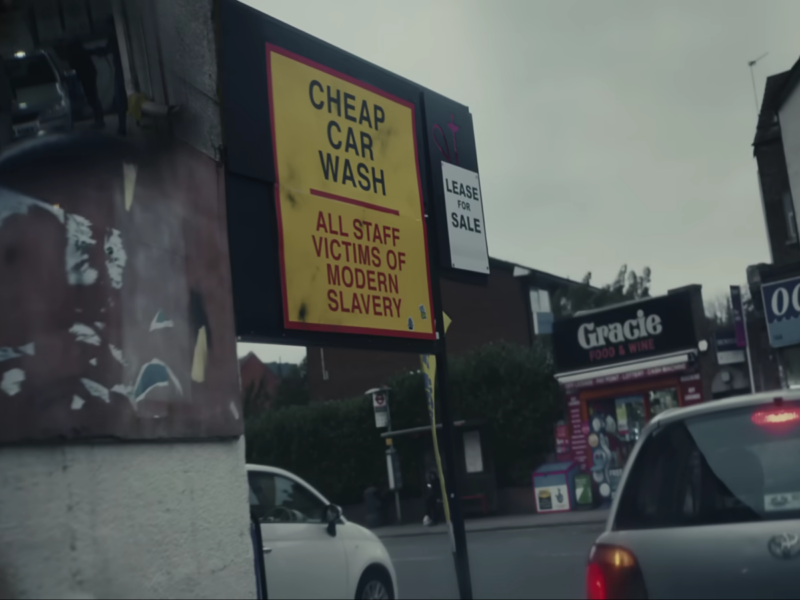
The Coalition to Stop Slavery are a group of leading UK charities, all heavily involved in fighting human trafficking. Their brief was to spread awareness of human slavery within the UK.
Read the case study