Our supporters had been telling us for years why they give. Arkyard helped us find ways to act on it. The campaign is now the strongest it has ever been.
The impact of people-first creative for Wycliffe
Read how a piece of donor research reshaped a paid social campaign for Wycliffe Bible Translators and what happened to donations once real people were on camera. A strong example of how approaching something with a fresh approach led to an increase in donations and a reduction in acquisition cost.

Client:
Wycliffe Bible Translators
In July 2025 we launched an always-on donor acquisition campaign for Wycliffe Bible Translators. Wycliffe exists to translate the Bible into the languages that have never had it, and their goal for paid social media was simple; growing a base of regular givers against clear targets we set together.
We built the campaign to run continuously rather than in bursts, which meant it had to keep finding new people month after month. Rolled into the campaign was the creative Wycliffe had available at the time: some videos, a few statics and a carousel.
Early performance was positive, cost per donation settled comfortably inside target and volume held while the creative was still new to the people seeing it. However, over subsequent months, the same campaign running on the same budget began returning progressively less. The price of creative fatigue was clear in the account with the cost per donation increasing by as much as 67%.
The price of creative fatigue
We made the adjustments we could, broadening audiences and testing new campaign structures, and with each time the numbers lifted for a week or two before settling back to roughly where they had been; the signature of creative hitting fatigue. Meta had shown the existing assets to everybody it felt would donate and didn’t know how to find more people.
Rebuilding the campaign was never going to fix this; we needed to change what was in the ad. Every asset we used had been built to explain the mission accurately and respectfully, which is a very different job from making somebody pause mid-scroll and feel something.
So we went and asked the donors
The answer turned out to be sitting in Wycliffe’s own database. Their donation form carries a free-text field asking supporters why they have chosen to give, and it has been collecting responses for years.
Our partners at Wycliffe handed over thousands of unique responses. We read and categorised every one, deliberately separating the underlying motivation from whatever happened to trigger the gift on the day, because a Christmas appeal explains the timing of a donation but not the reason behind it. Alongside that we ran user testing with a considered split of existing donors and people who had shown interest in Wycliffe but had never given.
The finding was unambiguous, with a personal connection to a specific Wycliffe worker as the single largest motivation, named by around a quarter of all donors. It sat ahead of belief in the cause of Bible translation and a long way ahead of trust in Wycliffe as an organisation.
People give to people
What donors wrote about was not translation methodology or the scale of the need. They named someone they had met at church, someone they had followed for years, someone whose family they prayed for by name. The mission mattered enormously to them, but it had reached them through a face.
That reframed the creative brief. The task was no longer to explain the work more clearly or more movingly, it was to introduce people to the person doing the work and let the relationship do what it has always done for this charity. The strongest asset available to us was not a better explanation of the mission, it was somebody real, talking straight to the viewer.
Putting the people doing the work on camera
We asked Wycliffe to go and film their own people with a brief that pushed deliberately against production value. We asked for people face to camera, using their own words, filmed simply and without a crew.
The Wycliffe team delivered, with films from their colleagues across the globe, leveraging cuts in both native language (and English subtitles) as well as in English; all to allow us the opportunity to test. Every variant went into the account to allow for algorithmic testing from the start. Each cut was judged on click-through rate and donations rather than on how we felt it looked.
The results
The results have been exceptional:
+272% donations
65% lower cost per donation
July 2026 became the strongest month the account has ever recorded, and it was 76% more efficient per pound than the previous peak. Most importantly, the activity is now pacing ahead of its donor target rather than behind it.
The takeaway
Better targeting was never going to fix this campaign. The research took a few weeks, cost very little beyond attention, and drew entirely on data the charity already held. It changed the creative brief, the creative changed the performance, and a campaign that had been drifting for seven months is now the strongest it has been.
Most organisations are sitting on something similar. A form field, a set of survey responses, a stack of thank-you letters that nobody has read as a body of evidence. It is usually the cheapest research you will ever run.
Want to kick-start your paid media campaigns?
We would love to chat about how we can support you to use paid media in the right way to increase donations.
-

 Mission Aviation Fellowship
A +41.42% reduction in donation drop-off rate for MAF
- Website Optimisation
When MAF noticed 71% of users dropping off in the donation journey, they turned to us to help understand why. We identified key barriers and implemented improvements resulting in more donations and a reduction in drop-off rate.
Read the case study -
 Coalition to stop slavery
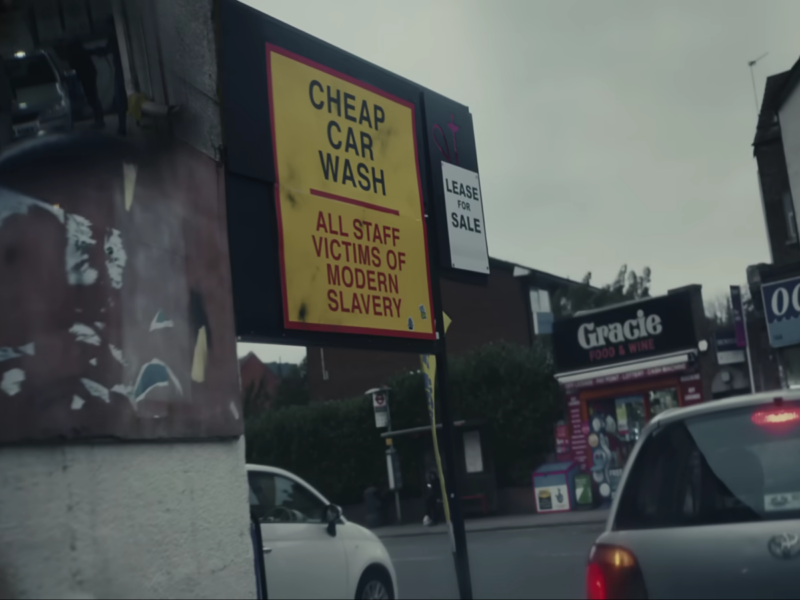
Helping the Coalition to Stop Slavery Reach 1 in 10 in the UK
- Paid media
The Coalition to Stop Slavery are a group of leading UK charities, all heavily involved in fighting human trafficking. Their brief was to spread awareness of human slavery within the UK.
Read the case study -

 Christians Against Poverty
How we increased social revenue 7x for CAP's Christmas Appeal
Intentional use of Paid Social delivered impactful results for Christians Against Poverty (CAP) in their 2023 Christmas appeal, resulting in a significant uplift in donations, new donors, revenue, and brand awareness.
Read the case study -

 Christians Against Poverty
Interactive donation component drives 17% uplift in revenue for CAP
- Website Optimisation
Through a research-led A/B test, featuring a new interactive donation slider, we achieved a statistically significant increase in both donation volume and revenue for Christians Against Poverty.
Read the case study